
What the 24-Hour View Shows
The phrase "arrested in the last 24 hours" sounds like one statewide list. West Virginia has nothing that tidy. An arrest can end with a citation. A booking may happen hours later, and counties publish on their own schedules. The best official statewide starting point is the West Virginia Division of Corrections and Rehabilitation Daily Incarcerations search. That tool tracks jail admissions by date and institution. It is not a full arrest feed, and it does not log every police contact.
The public results can show names, admission dates and times, demographic identifiers, and running totals. Exact fields shift with the interface. Booking is the jail's intake record, separate from the arrest report itself. A blank field does not rule out an arrest. A booking photo, if one exists, may sit in a separate current-custody profile. It may not appear in the dated admissions result.
| Source or field | What it can show | Limit |
|---|---|---|
| WVDCR Daily Incarcerations | Date and institution search; admission information, names, details, and totals may appear. | A dated jail-admissions view, not an all-arrest list or rolling 24-hour guarantee. |
| County or booking vendor | When verified, local booking number, booking date or time, charge, and sometimes a photo. | Coverage, fields, and refresh timing vary by county and vendor. |
| WVDCR offender profile | Current person or facility information, with a photo when one is available. | Useful for custody status, not proof of when or where an arrest occurred. |
Trust the label the source itself displays. If a date filter is offered, note the date you picked and the time you checked. A daily admissions result is not proof that every person arrested statewide made the list.
Note: The source's daily label names its admissions period and does not promise a rolling 24-hour search window.
West Virginia Same-Day Arrest Views
Why is there no single path for same-day arrest checks in West Virginia? The custody map explains it. WVDCR states that ten regional jails replaced the state's 55 county jails. Counties are served through those regional institutions. That setup makes a statewide custody search possible. The arresting sheriff or police department, though, may still hold the incident report. It may also keep the first record of the arrest. The two systems answer different questions. One asks where someone entered or remains in custody. The other asks which agency made the arrest.
The county-level landscape is fragmented. Many counties publish no stable official 24-hour arrest page at all. Some point visitors to WVDCR or a regional jail. Others rely on a vendor roster, or post notices instead of a booking feed. No statewide source backs that claim. No rolling 24- or 48-hour window is the standard anywhere. Describe each county as it actually operates, without guessing at links. WVDCR's history page lays out the regional-jail structure behind statewide custody routing.
Think of the regional map as a route to custody records, not a replacement for a county agency's arrest record. County rosters can change vendor or location without much notice. Confirm the current link on the sheriff or county government page before trusting a saved bookmark.
Check West Virginia Arrests Today
Start with the place where the arrest happened, then check the place where the person may have been booked. A city, county, or state agency may make the arrest, and the person may enter a regional jail; federal custody follows a separate route. This order narrows the search without assuming that one portal holds every record.
- Identify the arresting agency and county. Use the known location, agency notice, or direct contact to confirm jurisdiction. If the county is uncertain, the County Directory provides the statewide route to local sites.
- Open the official local source. Look for the sheriff's booking or inmate page, or follow the county's link to its regional jail or vendor. Keep the source's own date range and last-updated time in view.
- Check WVDCR Daily by date and institution. The Daily Incarcerations search can help find a dated jail admission. Treat the result as a custody admission, not the arresting agency's full report.
- Use the current custody search for one person. The official WVDCR Offender Search may help confirm a current facility record and may show a photo when available. A profile can lag a fresh intake or reflect a transfer.
- Ask the record holder if the result is missing. Contact the arresting agency or the relevant custodian. Describe the record and date as clearly as possible, and ask whether the record is held, pending entry, restricted, or maintained elsewhere.
Need custody status for one person? The VINELink Check offers notifications on its own track. When an online search is not enough, West Virginia's public-records law lays out the request path. You send a written request to the custodian. That means the office holding the record. The law sets a response window of up to five days, not counting weekends and legal holidays.
Be specific in the request. Name the arresting agency, the county, the rough date, and the record you want. A report or booking number helps. Ask for an electronic copy. Fees may cover reproduction. Search and retrieval charges are barred. A statutory exemption can still block access. West Virginia Code §29B-1-3 fixes both the deadline and the cost limits.
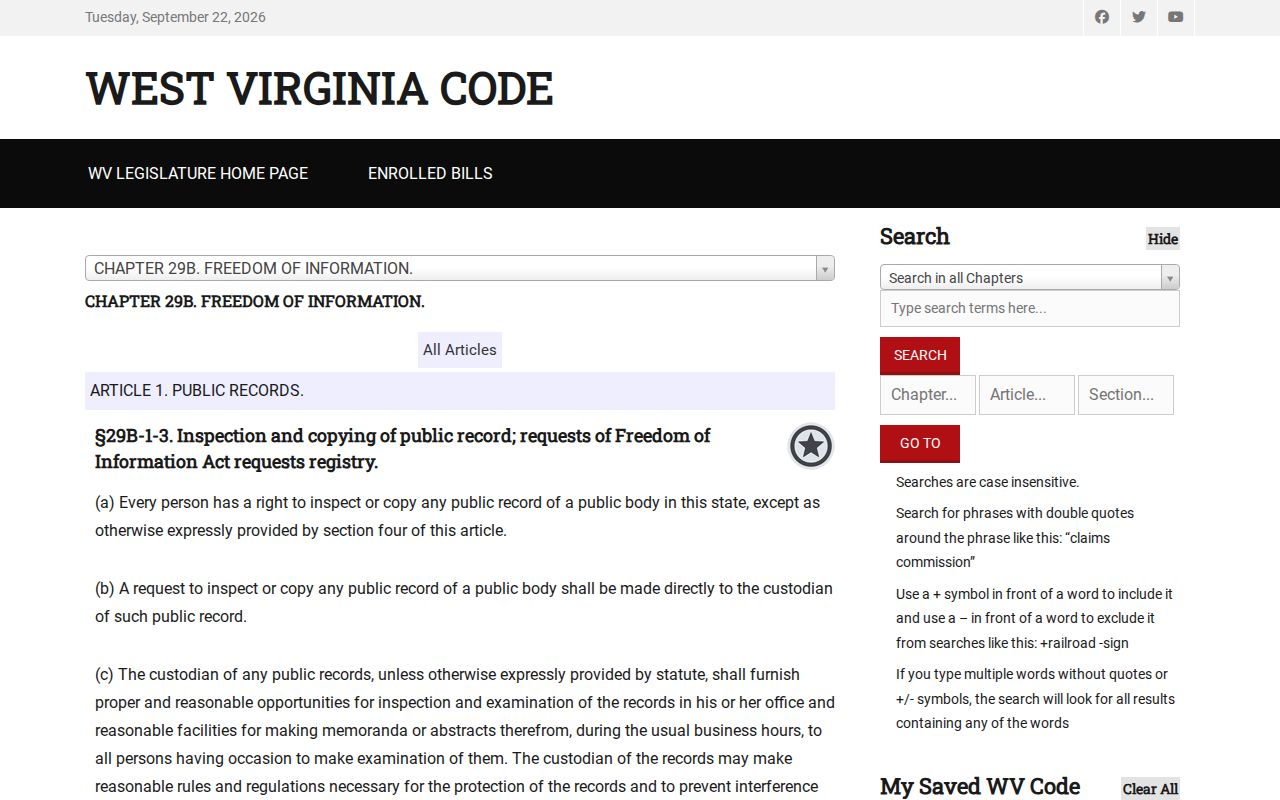
That response rule opens a path to an existing arrest record. Exemptions in the statute can still limit what the custodian releases.
Barbour Shows Local Roster Variation
County rosters vary. Barbour County gives one clear example. Its vendor roster, tied to the Barbour County Sheriff's Office through CountyGovServices, lists a booking number with date or time, the charge, and a photograph field. That layout belongs to Barbour alone. It promises no statewide update schedule or retention rule. Another county's page should not copy those fields. A photo field also does not mean every booking there has a public image.
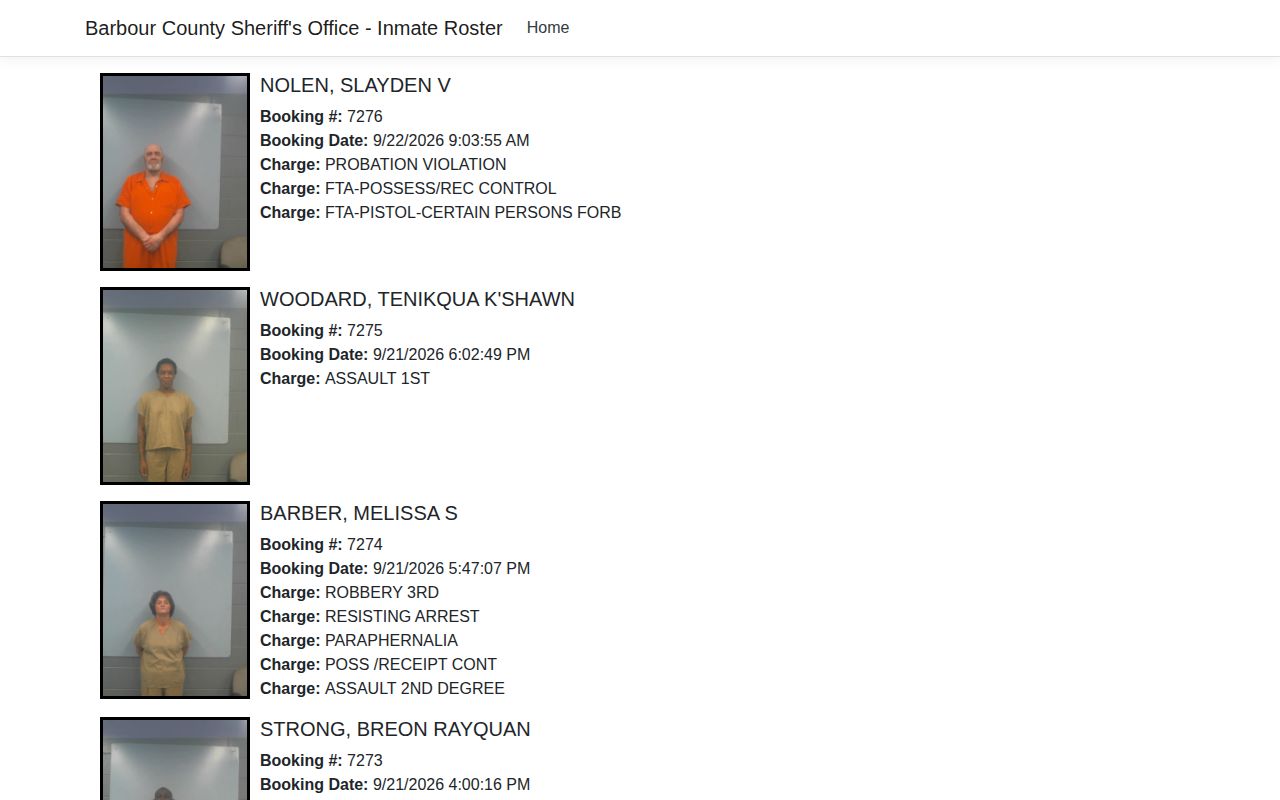
A roster is really a custody view. A police incident log tracks agency activity, and a court docket reflects a later case event. For a current person or facility profile, the official WVDCR Offender Search sits apart from the date-based admissions view.
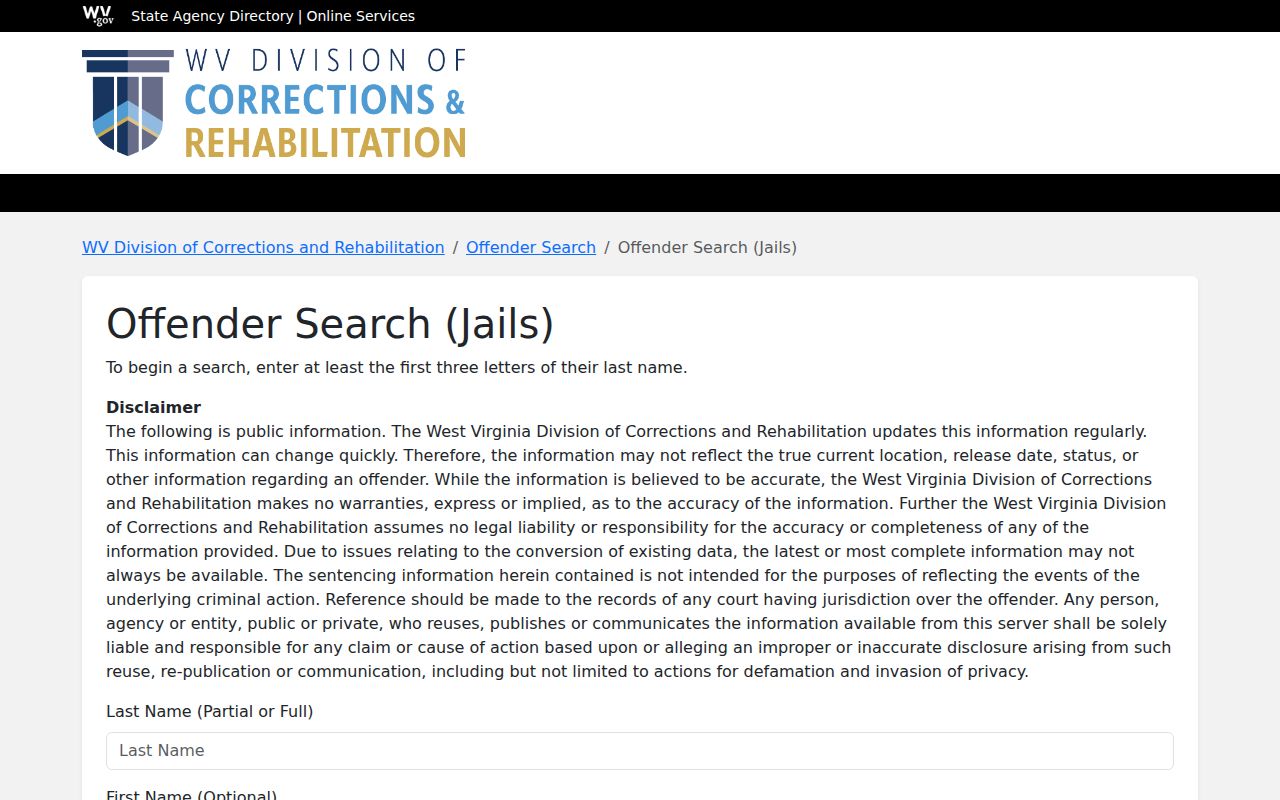
A name missing from a public roster has several possible causes. It could be a delay, a transfer, a release, or a restricted record. The booking may simply have happened somewhere else, and a blank result cannot tell you which explanation fits.
When a Same-Day Booking Is Missing
A same-day gap is not always a gap at all. Booking moves through data entry and system updates before anything reaches a public page. Someone arrested late in the day may not post until later. A transfer can shift where custody details live, and a record can sit under review or be lawfully withheld. So an empty search never proves that no arrest happened.
Photo access varies too. WVDCR admission procedures require intake photographs. Yet a public result shows an image only when one is available. One county's vendor may post booking photos. A neighbor may offer no photo roster at all. West Virginia Code §62-1-6a bars routine social-media sharing of some minor-offense mugshots, with stated exceptions. That law governs outside sharing, not the custody system's own intake steps.
A secondary site's "recent" or date filter is the publisher's label, nothing more. It may clarify how a private archive differs from an agency record. But it cannot confirm custody. Start with the official source. If displays conflict, ask the record custodian.
Note: A no-photo result can reflect publication rules or data limits and does not establish that no booking photograph was created.
West Virginia Multi-Day Arrest Records
A booking charge is just the opening entry. Charges can change. Cases can be dismissed. A roster entry may linger after custody ends. For real case progress, the court's later record is the place to look. A jail admissions page settles nothing beyond the booking itself.
Need a wider window than one day? The Arrest Log covers multi-day agency, county, and news sources across West Virginia. The statewide West Virginia recent arrests hub shows how booking records, local feeds, and court records connect.
Each source answers a different question. A jail entry can confirm admission. An agency report names the arresting body. A court record shows later case events, including dismissal or conviction, which is what "disposition" means. Where sources disagree, seek the custodian's current record rather than guessing at guilt, release dates, or final outcomes from a stale display.